What are the benefits of using an AI pair programmer?
Quick Answer: What are the benefits of using an AI pair programmer?
Yes. An AI pair programmer can speed up repetitive coding work, help draft basic functions, and reduce time spent searching for syntax and documentation. Developers can act on these gains by delegating routine tasks to the system while keeping human oversight for logic, testing, and security.
These tools differ from traditional static analysis plugins because they generate context-sensitive code suggestions inside a code editor. While traditional linters identify certain issues in written code, generative assistants can suggest what to write next based on available context, such as nearby code and comments.
Before adopting these assistants, teams should check task complexity, license terms, code privacy rules, budget limits, network latency, integration support, and team skill levels.
Software teams always look for ways to code faster without burning out. Writing code involves more than typing lines into an editor. Developers spend time creating routine setups, testing basic functions, and searching for unfamiliar syntax. When teams build cloud pipelines or manage infrastructure as code, these routine jobs can consume additional time. Many engineers now turn to AI coding tools to help with daily tasks. These systems act as virtual assistants inside the development workflow.
An AI coding assistant works by using available context to suggest code, complete functions, explain existing code, and answer documentation-related questions. It can generate a draft from a simple text comment. Instead of starting every file with blank space, a developer can ask the tool to draft a base structure. This shift in workflow has attracted widespread interest across the software industry.
Controlled tests show measurable changes in task speed. In a study published by Microsoft Research, developers completed a JavaScript HTTP-server task 55.8 percent faster when using GitHub Copilot than developers in the control group.
A June 2025 study of randomized field experiments at Microsoft, Accenture, and a Fortune 100 company found a combined 26.08 percent increase in completed tasks among 4,867 developers using an AI coding assistant. These measures are not identical: task time and completed tasks describe different aspects of productivity.
Even though speed is the most discussed benefit, other parts of the development lifecycle can change too. Let us look at how these assistants affect daily coding tasks, experience levels, review work, and job satisfaction.
Saving Time on Routine Code Generation
Writing boilerplate code takes up a large part of many projects. Setting up basic data models, writing simple loops, and configuring standard API endpoints require typing but may offer limited creative challenge. An AI pair programmer can help with these routine parts by turning a short description into a suggested block of code.
GitHub describes Copilot as offering inline suggestions, chat assistance, code explanations, and answers to documentation questions. These capabilities may reduce routine coding and leave more time for problem-solving, although the product description is not independent evidence of an outcome. See GitHub’s Copilot overview.
A longitudinal study on AI coding habits reported that 82 percent of participants spent less time writing code after adopting AI coding assistants. The study also found a shift toward reviewing, evaluating, and correcting AI output. These findings, available through arXiv, suggest that reduced code-creation time can come with more verification work.
This reduction in manual typing can also change how developers interact with documentation. Instead of leaving the editor to search through reference pages, a developer can ask the assistant for an explanation or example. The resulting answer still needs to be checked against the relevant documentation and project requirements.
Boosting Productivity for Less Experienced Staff
Experience levels play a role in how developers use AI coding assistants. The June 2025 field-experiment study found higher adoption and larger productivity gains among less-experienced developers. The research covered randomized experiments at Microsoft, Accenture, and a Fortune 100 company and included 4,867 developers. Its findings are reported by Microsoft Research.
When someone is new to a programming language, they may spend substantial time looking up basic syntax. An AI coding assistant can provide examples and explanations that match the available project context. This can make it easier to begin a task, although assistance does not replace learning or review.
For a junior developer, a digital helper can provide guidance during routine work. If they need to write a pattern or parse a data structure, the tool may draft a starting point. The developer still needs to understand the result and confirm that it meets the requirements.
Experienced developers can use these tools for predictable tasks as well. While a senior engineer may already know the syntax, drafting long test cases or mock data structures can still take time. Delegating those blocks may help some developers move through task lists more quickly.
This leveling effect can help teams distribute routine work. However, it should not eliminate mentoring, design discussions, or direct practice with the underlying technologies.
Shifting Focus Toward Code Review and Verification
When writing code becomes faster, the nature of software development can change. Instead of spending as much time creating code, developers may spend more time reading, testing, and reviewing AI output. The shift has sometimes been described as “supervisory engineering.”
This change brings new responsibilities. An AI assistant can produce code that does not meet business requirements or that contains errors. Because of this, developers cannot blindly accept every suggestion. They must check the generated code for edge cases, logic flaws, maintainability concerns, and security issues.
Evidence for speed is stronger than evidence for code quality and security. Good testing practices therefore remain important. Automated test suites, peer review, static analysis, and continuous integration can help teams evaluate proposed changes before they reach production. Human review remains necessary, especially for sensitive or complex code.
Improving Confidence and Daily Job Satisfaction
Writing software can feel frustrating when developers are blocked by minor bugs or tedious setup work. Vendor-affiliated GitHub surveys have reported that users experienced improvements in fulfillment, focus, and satisfaction when using Copilot. These findings are survey-based and should not be treated as causal proof.
In an Accenture randomized trial reported by GitHub, 85 percent of respondents said Copilot increased their confidence in code quality. This is a self-reported result rather than a direct measure of defect rates or maintainability. The finding is described in GitHub’s report on the Accenture trial.
When a tool handles repetitive parts of a task, developers may keep their momentum and spend more time on problem-solving. Still, perceived confidence should be paired with testing and review. Feeling more confident does not by itself demonstrate that generated code is correct or secure.
How AI Assistants Fit Into Modern DevOps Workflows
Software delivery involves more than writing local code. Code may pass through build pipelines, security checks, reviews, and deployment stages before reaching users. Integrating AI tools into these workflows requires careful planning.
When AI generates a large block of code, peer-review processes must adapt to evaluate the whole change. Reviewers need to examine logic, performance, maintainability, and security requirements rather than assuming that a fluent suggestion is reliable.
Infrastructure as code can also be a suitable area for assistance because configuration files often contain repetitive structures. An AI assistant may draft part of a configuration, but the result still requires validation and testing in an appropriate environment.
Security remains a priority when using AI-generated code. Static analysis, dependency checks, automated tests, and human review should continue to run as part of the development process. The goal is to balance faster code creation with careful verification.
What Are Common Limitations to Watch Out For?
While the benefits can be substantial, AI pair programmers have limits. They may not reflect a company’s complete business goals, architectural constraints, or operational requirements. A suggestion can appear syntactically plausible while still violating project rules.
Another issue is incorrect output. An assistant may suggest a function, parameter, or API usage that does not work in the project. If a developer accepts the suggestion without checking it, the code may fail to build or behave incorrectly.
Privacy is also a concern for enterprise teams. Organizations should understand how a tool handles source code and should select configurations that match company policies, contractual obligations, and data-protection requirements.
Evidence about quality, security, learning, and maintainability remains less settled than evidence about speed. A Stanford-hosted meta-analysis of generative AI, productivity, and learning in programming concluded that productivity gains generally occur but vary substantially by task, user, and evaluation method.
Finally, relying too heavily on AI can reduce opportunities to practice core problem-solving skills. Teams should balance assistance with code reading, debugging, design work, and independent learning.
How to Choose the Right AI Coding Tool for Your Team
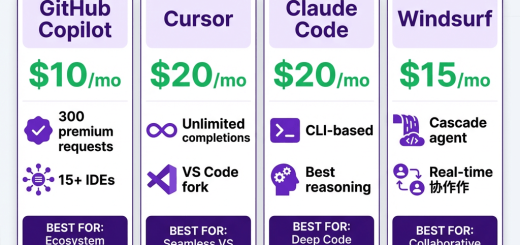
Selecting an AI assistant depends on your team’s needs, technology stack, and security requirements. Some tools focus on inline suggestions, while others also provide chat, explanations, and documentation assistance.
Teams should test different options on representative internal projects before making a commitment. Look at how well a tool handles the team’s primary programming languages and whether its data practices fit organizational requirements. Check the pricing model and expected usage against the software development budget.
Consider how the tool fits with existing code review, testing, version-control, and continuous-integration processes. A useful assistant should support the current workflow without weakening review standards.
Teams should also define how developers are expected to verify generated code. Clear policies can cover testing, security review, sensitive code, documentation, and when developers should write a solution without AI assistance.
What is the future of AI in software development?
AI tools are likely to remain part of the software development lifecycle, but their value will depend on context. Research indicates that productivity effects vary by task, user, and evaluation method, so teams should measure results in their own environments rather than assuming that every task will become faster.
As assistance reduces some code-creation work, developers may spend more time on system design, review, verification, and problem-solving. The ability to evaluate suggestions carefully will remain as important as the ability to generate them.
What is an AI pair programmer?
An AI pair programmer is a software tool powered by machine learning that runs within a development environment to suggest code, complete functions, explain code, and answer technical questions.
Do AI coding tools replace software developers?
No. These tools assist with routine tasks and generate suggestions, but they do not replace human judgment about architecture, business requirements, testing, security, or maintainability. Human developers remain essential.
Are AI-generated code snippets secure?
Not always. Evidence about code quality and security is less settled than evidence about speed. Teams should use code review, testing, static analysis, and appropriate security checks to evaluate AI-generated suggestions.
How do AI assistants affect junior developers?
The June 2025 field-experiment study found higher adoption and larger productivity gains among less-experienced developers. Assistants can provide syntax examples and explanations, but junior developers still need mentoring, practice, and a clear understanding of the code they accept.
Can AI coding tools work offline?
Availability depends on the specific product and configuration. Teams should verify connectivity requirements, deployment options, and data-handling policies before choosing a tool.
Conclusion
Integrating an AI coding assistant into a daily routine can offer measurable benefits, including faster task completion and less time spent writing routine code. Controlled and field experiments report productivity gains, while other findings suggest that developers may shift more time toward reviewing and verifying AI output.
These tools are most useful when teams treat them as assistants rather than replacements for engineering judgment. Human review, testing, and security checks remain necessary throughout the development lifecycle.